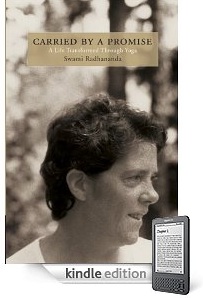
Kundalini Yoga for the West
Swami Sivananda Radha

A modern guide to the ancient spiritual practice of Kundalini yoga, complete with consciousness raising exercises, questions, and meditations to encourage the development of the aspirant's potential. Includes thorough investigations of the chakra systems in accessible and concise language


Paperback : $18.95 US / $24.95 Cdn / £14.99 UK
ISBN #: 1-932018-04-2

Hardcover : $24.95 US / $34.95 Cdn / £19.99 UK
ISBN #: 1-932018-05-0

Order Online:

img

Order by Phone:

  • In Canada, call 1-800-661-8711
  • In USA, call 1-800-251-9273

Reviews

" 'Kundalini Yoga for the West' is one of the few books on Kundalini Yoga written by a Westerner that strikes me as being authentic. I always admired Swami Radha for being very faithful to the tradition, but finding ways to translate that wisdom into Western terms using psychology and imagery that we are familiar with. Kundalini Yoga for the West is an outstanding accomplishment. I love referring to it, and I always recommend it to people."
- Georg Feuerstein, Yoga Research Center

"This book is a treasure chest. It is a welcome relief to read about Kundalini in ways that are clear, detailed, explicit and profound. A genuinely useful text for personal development.."
- Dr. James Fadiman, author of Personality and Personal Growth         

" Swami Sivananda Radha has intellectually discussed the subject devoting particular attention to character building through ethical discipline. The book is very well brought out. It is a useful book."
 - B.K.S. Iyengar         

"Her book combines Western how-to with Eastern inspiration. Her insights are profound and lucid, filled with wisdom on life, love, sex, dreams, poetry, dance, aesthetics, and imagination."
- American Library Association Booklist 

Click here to see the Kundalini cakra plates.

Excerpt

Imagination - Visualization:

Exercises

In the exercises that follow possible difficulties may arise because of objections to choosing an image of worship in the first place. This is a typical Western attitude. Yet the same individual cares to have pictures of a member of the family, such as his wife or child, on his desk, knowing all along that it is only a piece of paper with the image of a well-known individual on it. So why object to a picture that expresses symbolically an idea of Creation too great for the mind to focus on for prolonged periods of time?

a) Choose an image that is most pleasing to your mind. Let it be a symbol of all that is for you most perfect, most high, most beautiful. Remember what this image stands for: the masculine aspect, Cosmic Energy unmanifest.

b) At the spot of the Heart Lotus see the female counterpart now representing Cosmic Energy manifest in as much beauty and splendor as you can imagine.

The male figure in its symbolic meaning is bigger, because there is so much more Cosmic Energy unmanifest than you can possibly envision.

If you choose Buddha, see the Mother of Mercy sitting in His Heart.
If you choose Krishna, see Radha sitting in His Heart.
If you choose Shiva, see Parvati sitting in His Heart.
If you choose Jesus, see Mother Mary sitting in His Heart.

c) Now invoke a prayerful attitude and let the emotions express themselves in gratitude. To come in contact with the sacred Teachings should make anyone grateful. In this way the emotions should be included in all spiritual practice, as they thereby become cultivated.

It has already been pointed out how powerful the human mind is and how quickly it can expand in its concentration. Repeat the above exercise, now adding the Invocation of the Divine Light so that all that has been imagined is "seen" as a mass of White Light. The visualization of the Light will in due time saturate all forms that have been imagined. This process gives the mind enough substance in the beginning to keep it occupied over a long period of time. Through the Invocation of the White Light the aspirant is slowly helped to recognize the Energy that manifests in so many forms.

1) Sit in a meditation posture, cross-legged, or with your ankles crossed. Rest your hands, palms up, on your lap. (As an alternate posture, you may stand.)
2) Focus your eyes on the space between the eyebrows.
3) Try to think of yourself without the body or face; in other words, avoid the familiar reflection seen in the mirror.
4) Visualize your body as empty or hollow like a glass bottle.
5) See a small stream of White Light (the size of a thread) flowing down the center of this glass form, filling the feet, legs, trunk, arms, neck, and head.
6) Soon you cannot distinguish detailed limbs. This form that you call your body is now a mass of Light.
7) Hold this image (a mass of Light in the shape of your body) as long as possible. Repeat often until it becomes familiar.

Before continuing check all notes that have been written down after practice. Any feelings other than peaceful or harmonious ones are a signal to stop all exercises immediately. The aspirant can only resume exercises when there is an increased feeling of well-being physically and emotionally. Anything out of the ordinary indicates that personal guidance is definitely needed.

Do not skip any exercise. Learn to be persistent. There is more to learn in each one than meets the eye at first glance. Patience is hardly anybody's natural virtue and hence has to be cultivated.

It becomes quite obvious that great care and time have to be spent on the "laying of the foundation" as given in the First Lotus. It is very important to be able to follow instructions. When there are difficulties, the obstacles should be searched for in the ego, which is asserting its intellectual power and expressing an unfounded pride. The antidote to pride is surrender and humility.

© 2004 timeless

back to top


home | books | cds & video | where to buy | distributors | contact us | links

timeless books | 1-800-661-8711 | contact@timeless.org